
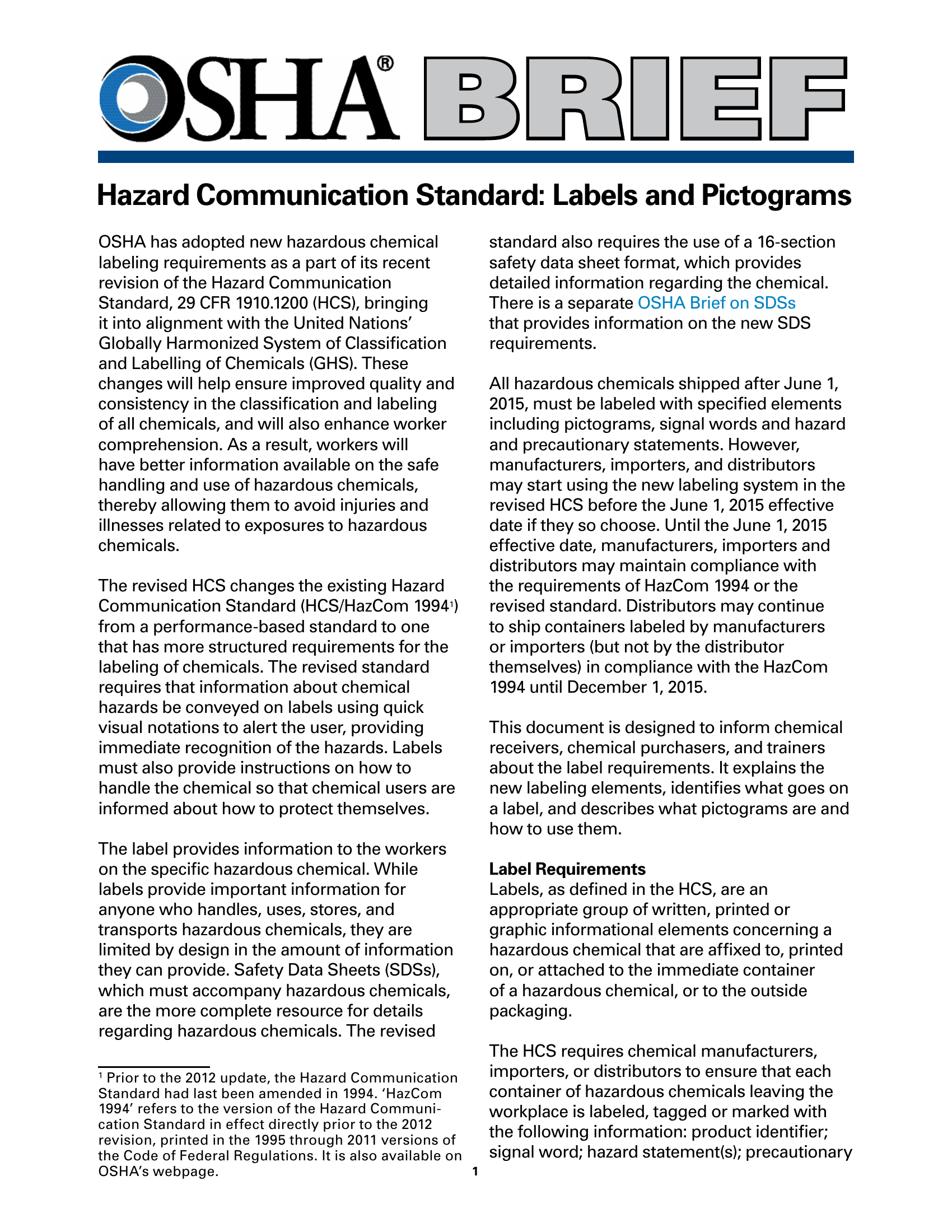
The OSHA Brief explains updates to the Hazard Communication Standard, aligning it with the Globally Harmonized System (GHS). It details new labeling requirements for hazardous chemicals, including pictograms, signal words, hazard statements, and manufacturer information. The goal is to improve consistency, worker understanding, and safety when handling chemicals, with Safety Data Sheets providing additional details.

Hazard Communications
This month’s Safety Toolkit features a 3-minute micro-training video on hazard communication and chemical safety—the everyday exposures that can cause serious health effects if ignored. The video explains how to read product labels and Safety Data Sheets, recognize hazard pictograms, and locate key resources like spill kits, emergency procedures, and Right-to-Know stations. You’ll also find four Toolbox Talks that dig into critical topics: controlling exposure to respirable silica, understanding and using Safety Data Sheets, reading and applying GHS labels, and recognizing hidden hazards like lead and asbestos.
Toolbox Talks
Staying safe on a busy jobsite starts with staying aware. Toolbox talks are a simple, effective way to keep safety top of mind—especially when workers are navigating heavy equipment, moving vehicles, and constantly changing conditions. These short, focused briefings help teams recognize risks, reinforce best practices, and meet safety training requirements in a practical, real-world way.
The Dust You Can’t See
You can’t smell it or feel it, but silica dust can scar your lungs for life. This talk explains where respirable silica comes from, how it damages your lungs, and why dry cutting, sweeping, or skipping your respirator are serious red flags. Crews learn to spot dust hazards, use wet methods and ventilation, and protect their lungs before it’s too late.
Your Chemical Playbook
SDSs are not just paperwork. They are your guide to handling chemicals safely. This talk shows how to read the 16-section format, find key information like hazards, PPE, and first aid, and make sure every SDS is accessible before work starts. Teams learn to stop guessing, start checking, and use SDSs as the first step in chemical safety.
Read Before You Reach
Chemical labels are more than stickers. They are lifesavers. This talk breaks down how to read a GHS label, what each pictogram means, and why signal words like Danger and Warning matter. Crews learn to stop using unlabeled containers, match labels with SDSs, and follow PPE instructions every time.
Invisible Hazards, Lifelong Harm
Lead and asbestos do not give warnings, but once they are in your body, the damage is permanent. This talk helps workers recognize where these hazards hide, from old paint to pipe wrap, and outlines how to control dust, wear proper PPE, and prevent contamination from following you home.

Got another topic in mind? Let us know!
Take a minute to let us know which safety topics matter most to you and your team. Your feedback helps us create toolbox talks and tips that speak to the challenges you're facing right now—on your job, with your crew, in real time.
✅ Check any topics you want more of
✍️ Suggest your own in the box at the bottom
Let’s make safety content that works for you.
OSHA’s Revised Hazard Communication Standard
Overview of the Updated Labeling System
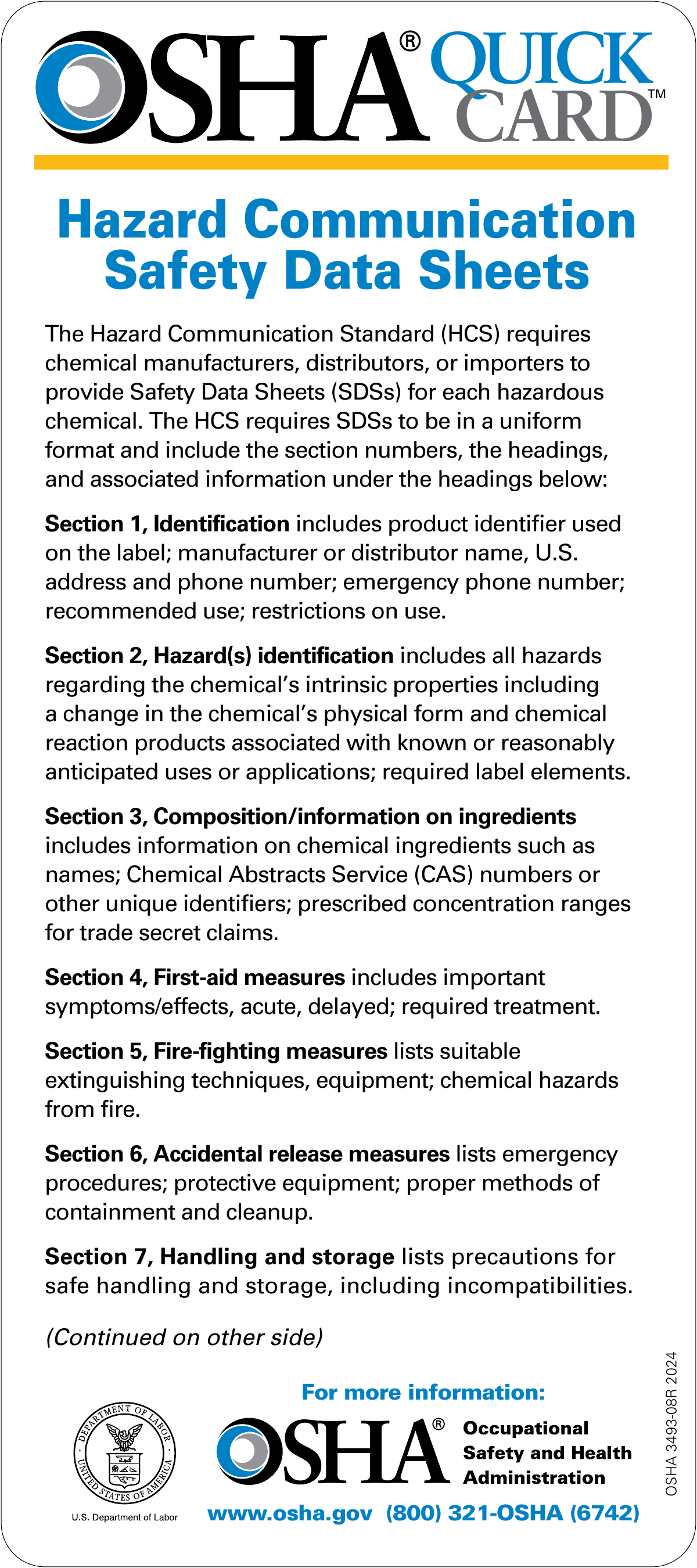
Hazard Communication SDS
This free OSHA QuickCard explains how Safety Data Sheets (SDSs) keep workers informed about chemical hazards. It breaks down the 16 required sections—from identification and hazard details to first aid, handling, and disposal—showing how each section helps employees find critical safety information quickly. The handout stresses accessibility and consistency, ensuring teams know where to look for exposure limits, protective measures, and emergency actions.
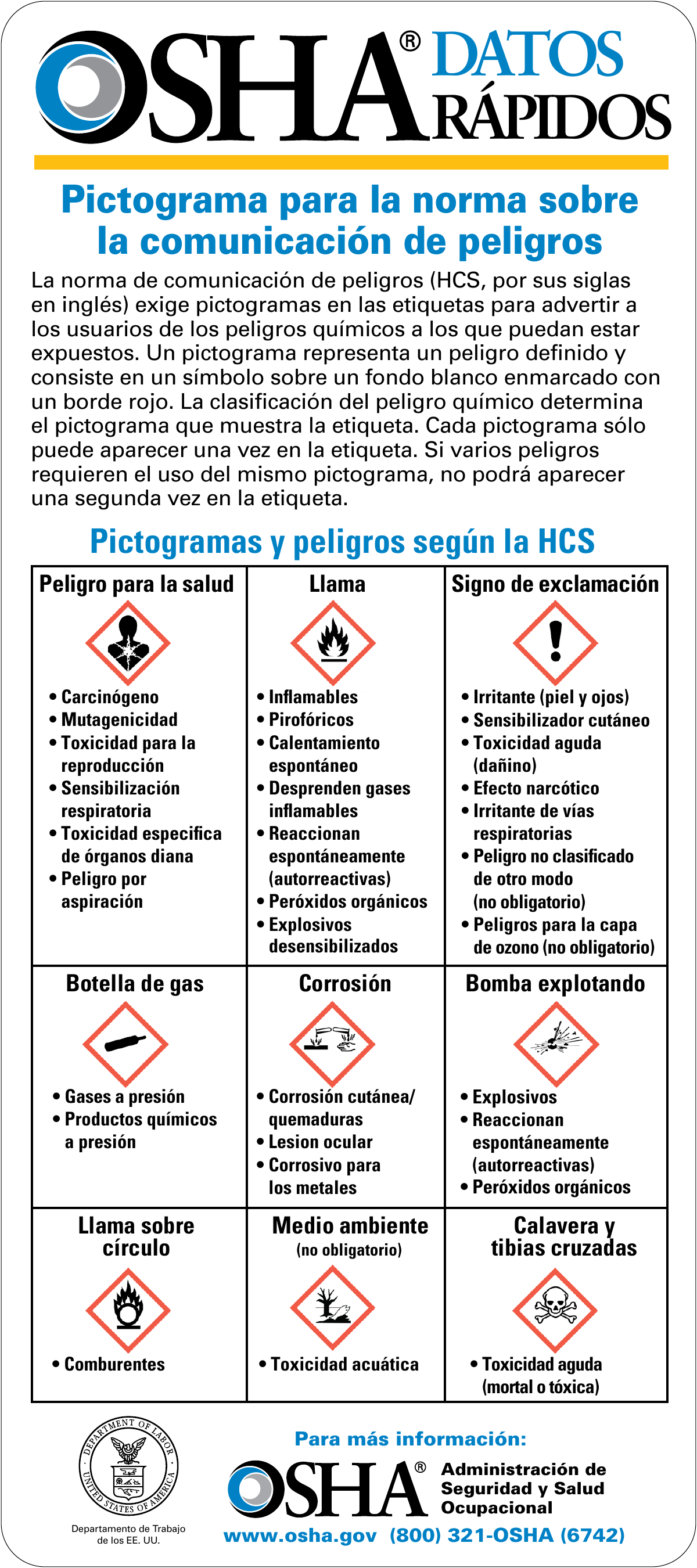
HAZCOM Standard Pictogram
This free OSHA QuickCard illustrates the nine hazard pictograms required under the Hazard Communication Standard. Each symbol—such as flame, corrosion, skull and crossbones, or exclamation mark—is explained with the types of hazards it represents, from flammables and toxins to corrosives and oxidizers. The handout helps workers understand label symbols at a glance so they can handle chemicals safely and respond appropriately to potential dangers.