

Toolbox Talks
Staying safe on a busy jobsite starts with staying aware. Toolbox talks are a simple, effective way to keep safety top of mind—especially when workers are navigating heavy equipment, moving vehicles, and constantly changing conditions. These short, focused briefings help teams recognize risks, reinforce best practices, and meet safety training requirements in a practical, real-world way.

Electricity Can Kill
Electricity is silent but deadly—even a small current can cause cardiac arrest or internal burns. Learn how electric shock happens, what materials conduct electricity, and why damaged cords are a leading cause of jobsite injuries.
Electrical Hazards
Electrical risks aren’t always obvious. From overhead lines to water near equipment, hazards can lurk in everyday tasks. Explore real case studies, common root causes, and steps you can take to recognize and prevent deadly mistakes.
GFCI Protection
Ground faults can occur in an instant and often involve moisture, tools, or faulty wiring. This talk breaks down how GFCIs work, why they matter, and how to inspect, test, and use them correctly to prevent electrocution.
Electrical Safety Essentials
From extension cords to temporary power, basic electrical safety practices can prevent serious injuries. Discover OSHA-compliant tips, learn why daily inspections are critical, and walk through lockout/tagout and awareness best practices.
Download the OSHA FactSheet
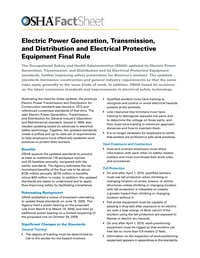
Electric Power Generation, Transmission,
and Distribution and Electrical Protective
Equipment Final Rule
This OSHA fact sheet summarizes updates to the Electric Power Generation, Transmission, and Distribution and Electrical Protective Equipment standards. The rule enhances worker safety by aligning construction and general industry requirements, improving training, fall protection, arc hazard protection, and coordination between employers.

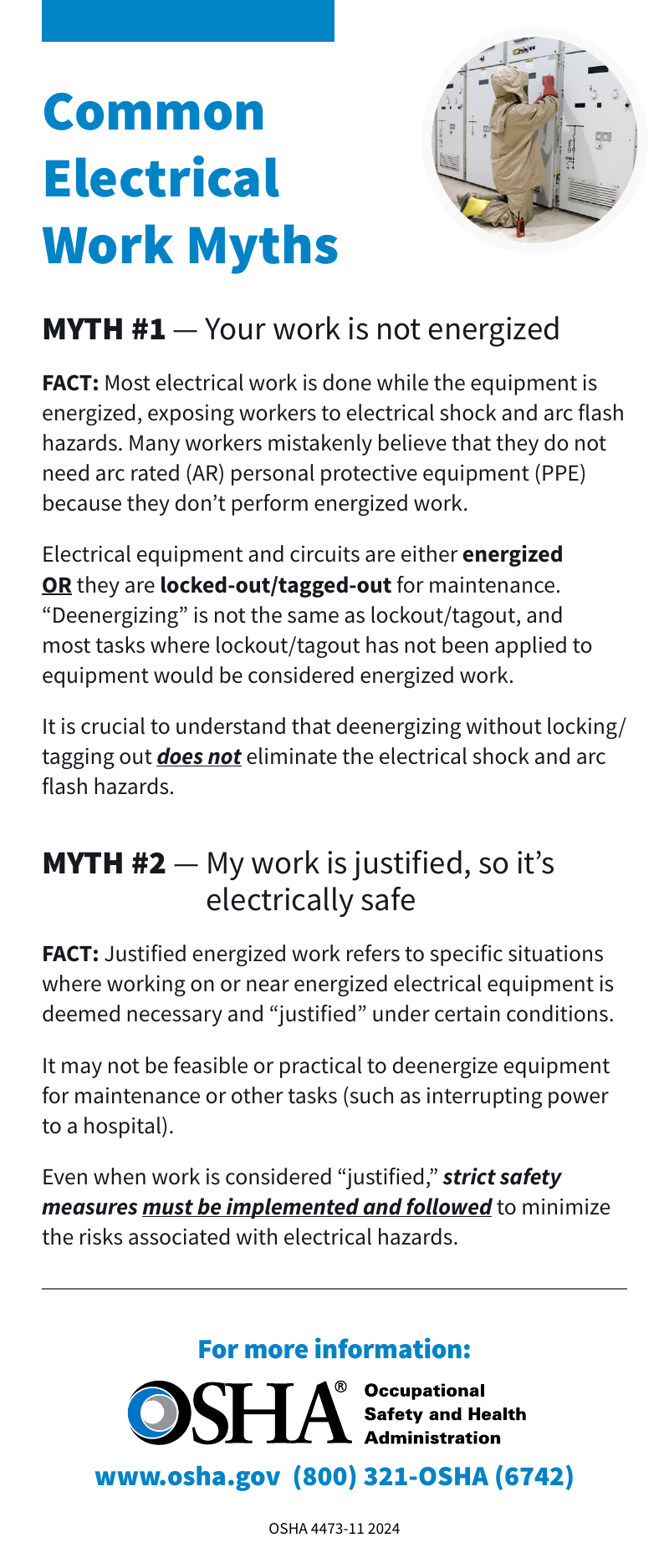
Electrical Work Myths
This free OSHA handout dispels two dangerous misconceptions about electrical safety: that de-energized means safe, and that justified energized work is risk-free. It reinforces the importance of lockout/tagout procedures and proper PPE, helping workers understand when electrical hazards still exist and why safety protocols matter even during "justified" tasks.
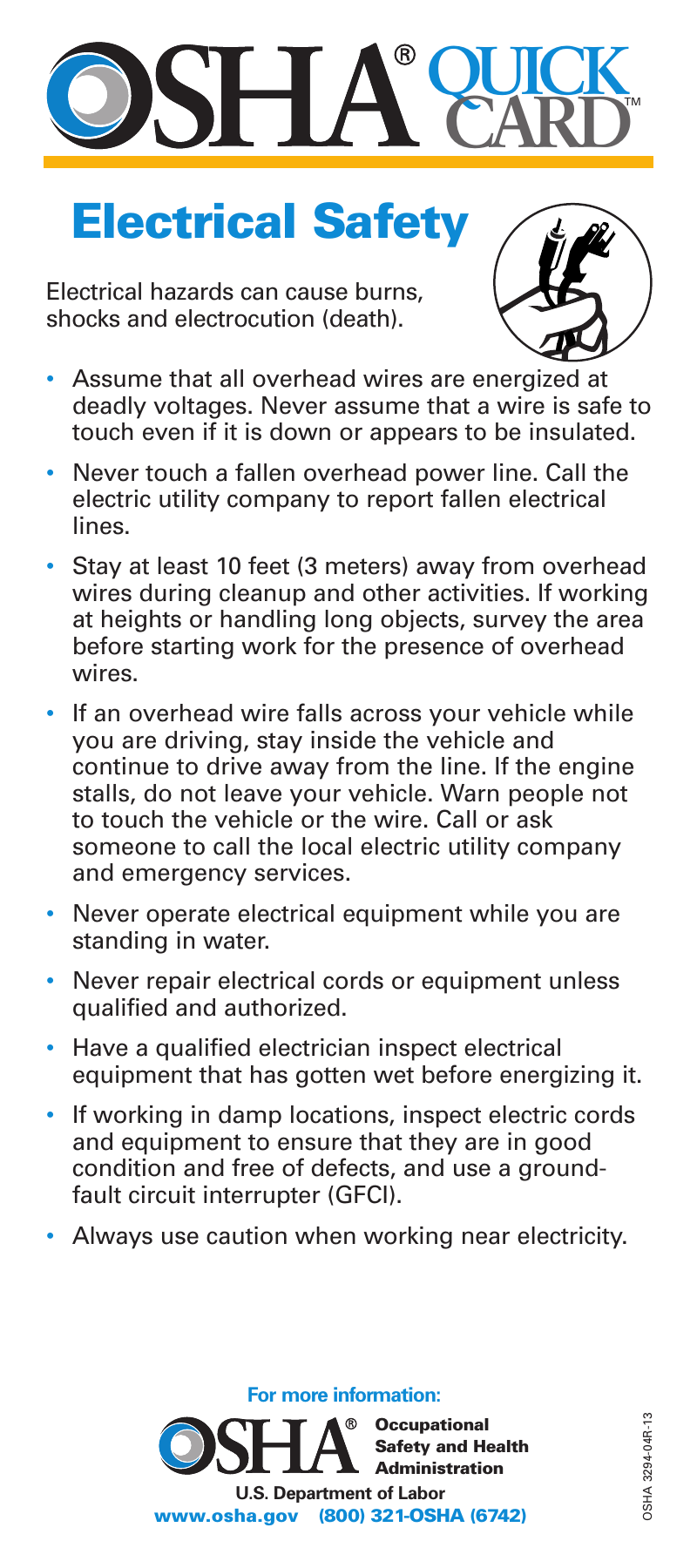
Electrical Safety
This OSHA Quick Card offers straightforward, practical guidance for avoiding electrocution hazards, especially in cleanup or emergency response settings. Its concise format makes it ideal for field use, reminding workers to treat all wires as live and stay alert around water, damaged equipment, and overhead lines.
Download the OSHA FactSheet
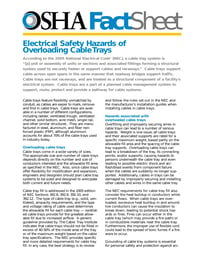
Electrical Safety Hazards of Overloading Cable Trays
This OSHA fact sheet explains the risks associated with overfilled or improperly maintained cable trays, including fire, electric shock, and arc-flash hazards. It highlights the importance of adhering to NEC guidelines for cable tray fill, grounding, and conductor installation to ensure safe and compliant electrical systems.