

SMG U Library

Heat & Hydration

This month’s Heat Safety toolkit includes a 4-minute micro-training on heat illness—spotlighting the symptoms of heat cramps, heat exhaustion, and heat stroke, and what actions to take before it’s too late. You’ll also find four Toolbox Talks that reinforce real-world prevention strategies: choosing the right hydration (and avoiding the Gatorade trap), recognizing early signs of heat disorders, dressing smart for summer conditions, and challenging the myth that “sweat means safe.”

SMG U Toolbox Talks

Toolbox Talks

Staying safe on a busy jobsite starts with staying aware. Toolbox talks are a simple, effective way to keep safety top of mind—especially when workers are navigating heavy equipment, moving vehicles, and constantly changing conditions. These short, focused briefings help teams recognize risks, reinforce best practices, and meet safety training requirements in a practical, real-world way.

01

Sweat ≠ Safe

Sweating isn’t a sign you’re safe—it’s a warning that your body is working hard to keep up. This talk challenges common myths about sweat, explains why stopping can be dangerous, and walks through early symptoms of heat stroke. Workers learn to recognize red flags and take action before it’s too late.

02

The Gatorade Myth

Sports drinks aren’t always your friend in the heat. This talk breaks down what’s really in that bottle, why sugar overload and poor timing can lead to dehydration, and how to use electrolytes the right way. A smarter hydration strategy starts here.

03

Heat Disorders

From heat rash to life-threatening heat stroke, this talk outlines the four major heat-related illnesses, how they progress, and what symptoms to watch for. Teams get practical prevention steps and clear guidance on when and how to act.

04

Ready for the Heat?

Being prepared for summer heat takes more than showing up. This talk covers hydration, clothing, food, sunscreen, sleep, and medication awareness. Workers learn how to prepare their bodies and monitor their crew before heat illness sets in.


Links to Free OSHA Resources
OSHA Resource

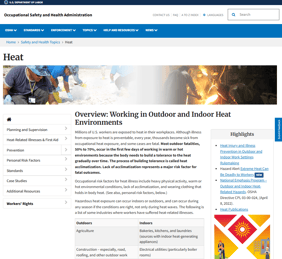
Review the OSHA Overview

OSHA Website Heat


Overview: Working in Outdoor and Indoor Heat Environments

Most outdoor fatalities, 50% to 70%, occur in the first few days of working in warm or hot environments because the body needs to build a tolerance to the heat gradually over time. The process of building tolerance is called heat acclimatization. Lack of acclimatization represents a major risk factor for fatal outcomes.


QuickCard

Protecting Workers from Heat Stress

This free OSHA quick card outlines the serious risks of heat illness and gives workers clear, practical steps to stay safe in hot conditions. It explains how heat exhaustion and heat stroke develop, lists key risk factors like humidity and heavy labor, and highlights early warning signs to watch for. The handout reinforces the importance of hydration, acclimatization, and emergency response, helping teams recognize when heat becomes a threat—and how to act before it’s too late.
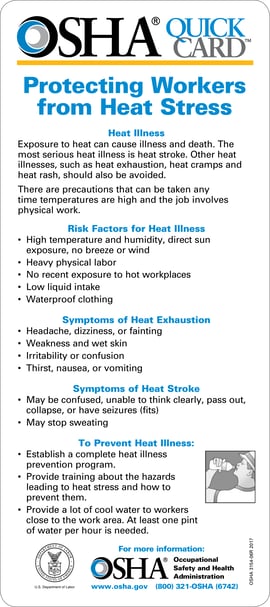
 

OSHA_heat_stress_page1


Workplace Tool

Heat Safety Tool

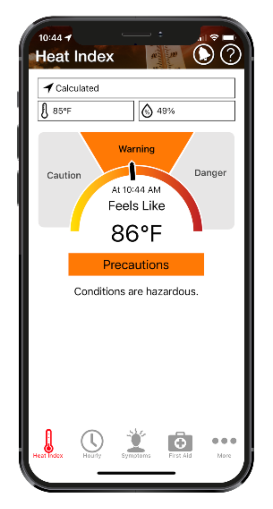
The OSHA-NIOSH Heat Safety Tool is a free mobile app that helps protect workers from heat-related illnesses by providing real-time risk assessments based on the heat index. Designed for both indoor and outdoor environments, the app calculates the heat index at your specific location and displays the associated risk level—along with tailored safety reminders. Users receive guidance on hydration, rest breaks, emergency planning, workload adjustments, acclimatization, training, and peer monitoring. Available in English and Spanish for both Android and iPhone, the app equips supervisors and workers with essential, on-the-go information to stay alert, take action, and prevent serious heat illness on the job.


OSHA Heat Safety Tool Screen Capture - shows an example of the Heat Index app where the risk level is displayed as a warning.


Contact us