

This month’s Safety Toolkit features a 3-minute micro training video focused on stairs and ladders, reinforcing safe access decisions and the hazards that come from rushed setups and everyday shortcuts. The video highlights common misuse, improper ladder setup, and moments when a ladder or temporary stairway is the wrong choice altogether. You’ll also find four Toolbox Talks that reinforce key access risks: ladder misuse hazards, stairway construction hazards, unsafe access choices, and the 4 to 1 ladder setup rule.
SMG U Toolbox Talks
Toolbox Talks
Staying safe on a busy jobsite starts with staying aware. Toolbox talks are a simple, effective way to keep safety top of mind—especially when workers are navigating heavy equipment, moving vehicles, and constantly changing conditions. These short, focused briefings help teams recognize risks, reinforce best practices, and meet safety training requirements in a practical, real-world way.
01
Ladder Misuse Hazards
Ladders are familiar tools, which is why shortcuts happen. This talk focuses on common misuse like standing on top caps, overreaching, carrying tools while climbing, and using the wrong ladder for the task. Crews learn how small habits quickly turn into serious fall risks and how to reset before climbing.


02
Stairway Construction Hazards
Temporary and unfinished stairways create hidden fall hazards. This talk covers missing guardrails, unstable treads, poor lighting, and debris that make stairways unsafe. Crews learn what conditions must be in place before stairways are used and how to spot problems early.


03
Unsafe Access Choices
Not every task should be done from a ladder or temporary stairway. This talk challenges crews to stop and reassess when height, load, surface conditions, side pressure, or drop zones increase risk. Crews learn when to choose a safer access method instead of trying to make it work.


04
The 4 to 1 Ladder Setup Rule
Most ladder falls start with poor setup. This talk reinforces the 4 to 1 rule for extension ladders and shows how to quickly check the angle using the stand test. Crews learn how proper setup prevents kickouts, tip overs, and unstable climbs.



Got another topic in mind? Let us know!
Take a minute to let us know which safety topics matter most to you and your team. Your feedback helps us create toolbox talks and tips that speak to the challenges you're facing right now—on your job, with your crew, in real time.
✅ Check any topics you want more of
✍️ Suggest your own in the box at the bottom
Let’s make safety content that works for you.
Ground’s frozen? Put the downtime to work.
If the weather’s too cold to get much done on site, bring your crew to the Safety Yard. Winter slowdowns are the perfect time to knock out OSHA courses and hands-on training that keeps your team sharp.
✓ Check the open enrollment schedule
✓ Pick the sessions that fit your downtime
✓ Get your crew trained while the jobsite’s on pause
Make the most of the freeze.
OSHA QuickCard
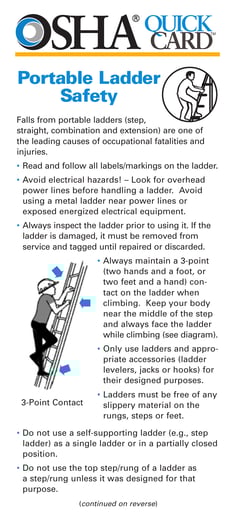
The OSHA Quick Card is a short, field-ready reference designed to highlight essential safety practices for a specific task or hazard. It is not a full training program or policy document. Instead, it serves as a quick reminder of critical do’s and don’ts that workers and supervisors can review before starting work or during daily safety conversations. To use it effectively, review the card during pre-task planning, toolbox talks, or on the job site to reinforce key behaviors, identify common risks, and prompt discussion about how the guidance applies to current conditions. The Quick Card works best as a supplement to formal training, helping keep safety expectations visible, practical, and top of mind.
Falling Off Ladders Can Kill: Use Them Safely
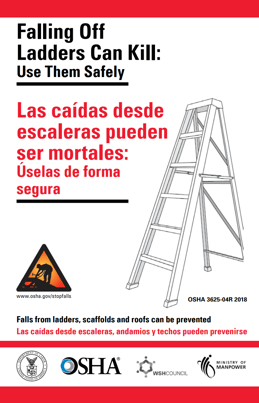
This is an OSHA safety booklet, Falling Off Ladders Can Kill: Use Them Safely (OSHA 3625, 2018), created as part of OSHA’s Stop Falls initiative. It’s a short, bilingual (English and Spanish) field guide meant to reduce ladder-related fall deaths and injuries in construction by turning key ladder safety requirements into practical, job-ready guidance. Use it as a pre-task planning tool and a toolbox talk reference: review the “When should you use a ladder?” section before choosing equipment, use the setup and climbing reminders as a quick checklist before anyone steps up, and pull the inspection and storage guidance into routine ladder checks so damaged ladders get tagged out and removed from service. It also works well for supervisor coaching and new-hire onboarding because it ties the why (falls are preventable and common) to specific behaviors crews can verify on the spot.
OSHA Resource
Ladder Safety
Construction eTool
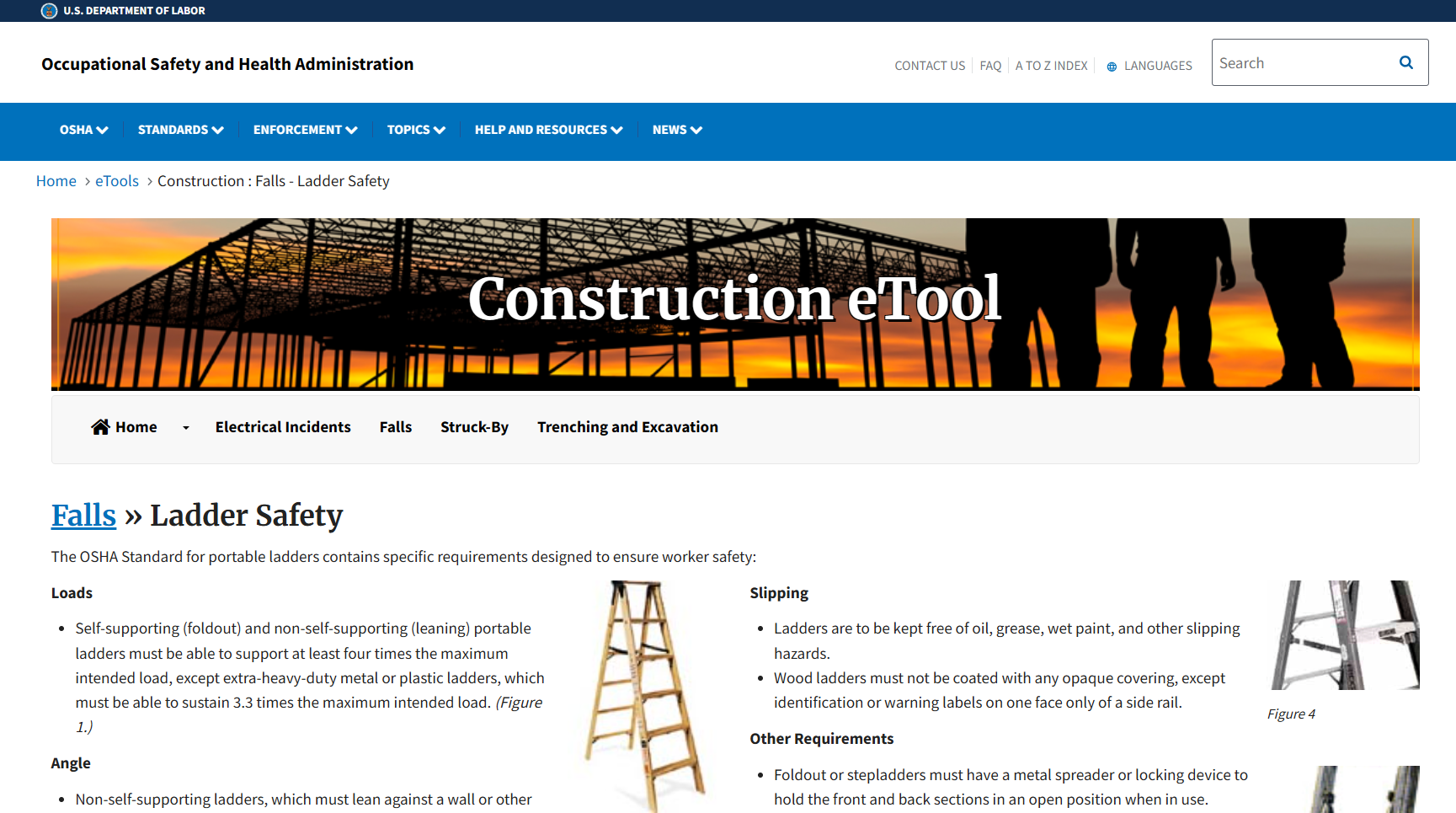
This OSHA Construction eTool page on Ladder Safety is a practical, visual reference that breaks down key portable ladder requirements from OSHA’s construction standard into clear, task-focused guidance. It explains critical setup and use rules, such as load ratings, proper ladder angles, rung spacing, slip prevention, and basic do’s and don’ts, using plain language and photos to show correct and incorrect practices. Use it as a quick field refresher, pre-task planning aid, or supervisor coaching tool to help crews verify ladder setup before work begins and reinforce OSHA expectations tied directly to 29 CFR 1926.1053.
OSHA Resource
Safely Installing, Maintaining and Inspecting Cable Trays
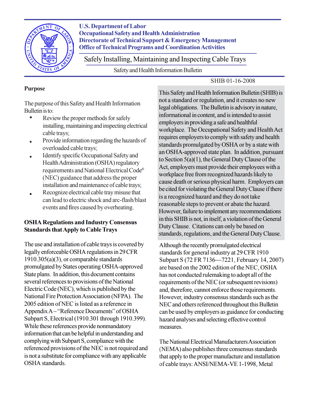
Safety and Health Information Bulletin
This is an OSHA Safety and Health Information Bulletin (SHIB) on safely installing, maintaining, and inspecting electrical cable trays. It’s an advisory resource, not a regulation, and it’s meant to help employers and crews recognize cable tray hazards and apply proven controls, especially around overloading, improper wiring methods, grounding and bonding, and damage that can lead to shock, arc-flash, or fire. Use it as a reference during design reviews, maintenance planning, and field inspections: confirm the OSHA requirements that apply, compare your installation against NEC and manufacturer guidance, and use the “overloaded trays” and “proper loading/support” sections as practical checkpoints to spot issues and correct them before they become failures.
OSHA Resource
Stairways and Ladders
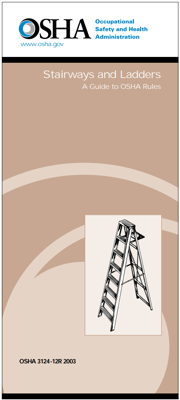
A Guide to OSHA Rules
It’s an OSHA informational booklet (OSHA 3124, revised 2003) that summarizes the main construction requirements for stairways and ladders in plain language. It’s meant to help employers and crews understand what OSHA’s construction standard covers, including when stairways or ladders must be provided, ladder and stair setup rules, fall protection expectations, and training requirements, with references to the applicable regulation (29 CFR 1926.1050–1060). It is not itself a standard, but it’s a practical compliance guide you can use for supervisor coaching, toolbox talks, and quick checks when planning access between levels.