

SMG U Library

Struck By/Caught Between

This month’s Safety Toolkit features a 4-minute micro-training video on struck-by and caught-between hazards—the types of incidents that happen fast and cause serious injuries. The video highlights real jobsite situations to show how awareness, positioning, and communication can prevent life-altering events. You’ll also find four Toolbox Talks that dig into critical topics: working safely around hydraulic pressure, avoiding crushing incidents, preventing aerial lift hazards, and staying clear of caught-in and crush risks.


SMG U Toolbox Talks

Toolbox Talks

Staying safe on a busy jobsite starts with staying aware. Toolbox talks are a simple, effective way to keep safety top of mind—especially when workers are navigating heavy equipment, moving vehicles, and constantly changing conditions. These short, focused briefings help teams recognize risks, reinforce best practices, and meet safety training requirements in a practical, real-world way.
01

Under Pressure

Hydraulic systems pack hidden dangers. This talk explains how stored energy can release without warning, creating crush risks, fluid injection injuries, or sudden equipment drops. Learn why blocking, lockout/tagout, and proper inspections are essential every time.

02

Don’t Get Crushed

Caught-in and caught-between incidents are fast, severe, and part of OSHA’s “Fatal Four.” This talk covers common hazards—from blind spots to suspended loads—and explains how to stay visible, avoid pinch points, and follow LOTO to protect yourself.

03

Lift with Care

Aerial lifts save time but bring crush risks if used wrong. This talk explains how overhead obstructions, unstable ground, and poor positioning can trap or injure workers. Spotters, harness use, and pre-use checks are key to staying safe every time.

04

Between a Rock and a Hard Place

Machines, forklifts, and unstable materials can turn small lapses into serious caught-in or crush injuries. This talk highlights clothing hazards, pinch points, and prevention steps—from PPE to guarding—so you can stay clear, stay focused, and stay safe.

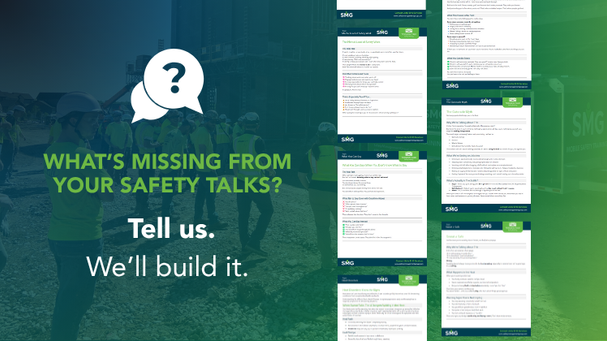
whatsmissingtbt


Got another topic in mind? Let us know!

Take a minute to let us know which safety topics matter most to you and your team. Your feedback helps us create toolbox talks and tips that speak to the challenges you're facing right now—on your job, with your crew, in real time.

✅ Check any topics you want more of
✍️ Suggest your own in the box at the bottom

Let’s make safety content that works for you.


Links to Free OSHA Resources
OSHA Resource

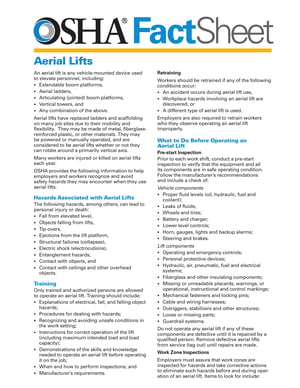
OSHA Fact Sheet: Aerial Lifts


aerial-lifts-factsheet-page1


Aerial Lifts

Aerial lifts are vehicle-mounted devices used to elevate workers, including boom platforms, aerial ladders, vertical towers, and combinations of these. They are commonly used in place of ladders and scaffolding due to their mobility and flexibility, but they present unique hazards such as falls, tip-overs, electrocution, and falling objects. OSHA requires that only trained and authorized workers operate aerial lifts, with training covering hazard recognition, safe operation, inspections, and manufacturer requirements. Regular pre-start inspections and work zone evaluations are critical to preventing accidents and ensuring safe operation.

QuickCard

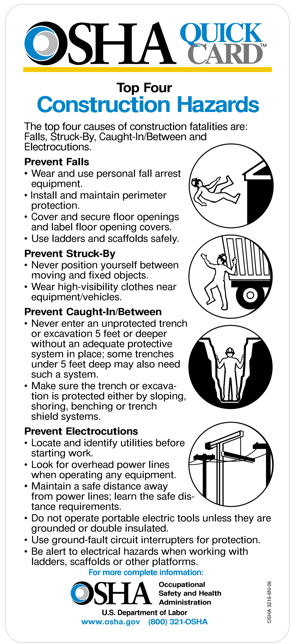
Top Four Construction Hazards

This free OSHA quick card outlines the four leading causes of construction fatalities—falls, struck-by incidents, caught-in/between hazards, and electrocutions—and gives workers straightforward steps to prevent them. It explains practical controls like fall protection, trench safety systems, and proper ladder and scaffold use. It also reinforces essential practices such as identifying utilities, maintaining safe distances from power lines, and wearing high-visibility clothing near equipment. The handout reminds workers of the everyday choices that keep them safe and underscores that these hazards are preventable when safety procedures are followed consistently. It’s a quick, field-ready tool to help teams recognize risks and take action before harm occurs.
English | Spanish

construction_hazards_qc_page_1_cropped-1

QuickCard

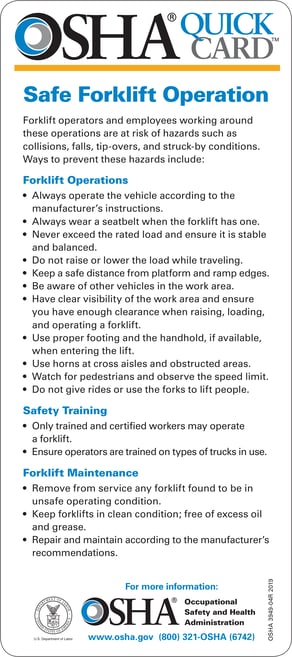
Safe Forklift Operation

This free OSHA quick card explains the fundamentals of safe forklift operation, giving both operators and nearby workers clear steps to reduce risks of collisions, tip-overs, falls, and struck-by incidents. It covers essential practices such as following manufacturer instructions, wearing seatbelts, keeping loads balanced, and maintaining safe speeds. The handout stresses the importance of visibility, pedestrian awareness, and using horns in blind spots. It also reinforces that only trained and certified employees may operate forklifts and highlights the need for regular inspection, cleaning, and maintenance. By following these practical guidelines, workers can prevent common hazards and keep forklift operations safe and efficient.

English | Spanish

OSHA3949_page_1_cropped


Contact us